
Zelensky and Orbán: The Deteriorating Relationship Between Ukraine and Hungary
By Olivia Tobolski
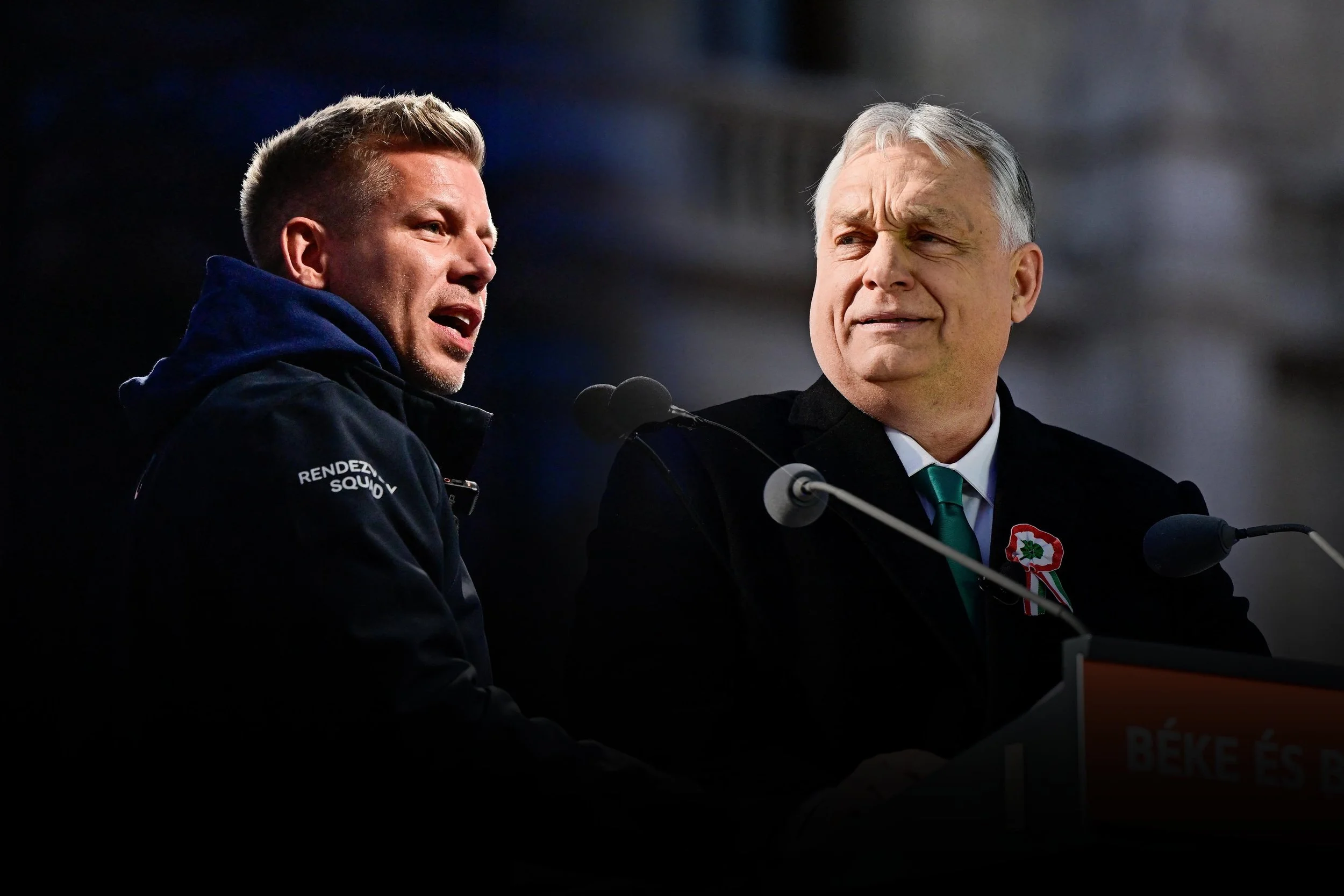
Peter Magyar’s TISZA party won the Hungarian Parliamentary election on April 12, 2026, beating longtime leader Viktor Orbán’s Fidesz. Credit: Reuters
Peter Magyar’s victory in the Hungarian Prime Minister election on April 12th was a momentous one, ending Viktor Orbán’s 16 year-long second term. Many inside and outside of Hungary anxiously await change, particularly in Hungary’s attitude towards Ukraine for the latter. It is widely believed that Ukraine has the full support of the European Union when it comes to all things Russia. Since the EU was founded, at first to stabilize Western Europe and prevent future conflict, it has given immense economic, military, and political aid to allies countering unfavorable Russian behavior. This is not necessarily true, however, as countries like Hungary refrain from providing economic, political, and military aid to Ukrainians in this time of conflict and devastation. Such limitations have ushered in a period of tension and animosity between Hungary and Ukraine, shown most clearly in the relationship between former Prime Minister Viktor Orbán and President Volodymyr Zelensky respectively. This strain between two prominent players in Eastern Europe has heavily impacted the politics and responses of the EU to the war in Ukraine, as well as Zelensky’s and Orbán’s reputations. Such history between the two countries complicates domestic and foreign matters for Magyar as he takes the reins.
A critical factor in the ongoing Russo-Ukrainian War is the politics of the EU and the North Atlantic Treaty Organization (NATO). Hungary has long hesitated to take pro-Ukrainian action, recently vetoing increased EU sanctions on Russia. Hungary also rejected a $104 billion loan to the country, a number that would make quite a difference in Ukraine’s odds in the war by allowing them to produce more military equipment, buy necessary food, and aid its destroyed cities. Hungary is officially neutral in the conflict, but many have pointed out that Hungary and Russia’s relationship has strengthened during the course of the war, with Hungary increasing diplomatic correspondence with the Russian embassy and purchasing more oil from the country. In fact, before the invasion, Hungary received 61% of its oil from Russia. Russia is now the source of over 85% of its supply.
With the conflict in Iran threatening oil access worldwide, energy security has been brought to the forefront of policy debates in several countries, including Hungary. The tensions between Orbán, head of the conservative Fidesz Party, and Zelensky deepened further when the Druzhba oil pipeline was shut down in January 2026. The pipeline, located in Ukraine, provides Hungary and Slovakia with oil from Russia but was damaged during a Russian attack. Officials in Hungary have argued that any technical damage has been fixed, implying that any further hold-up from the Ukrainians is a political maneuver. Such arguments led to Orbán threatening to withhold natural gas exports to Ukraine until the pipeline is restored.
A moment that further escalated the clash between the two leaders occurred on March 6th when the Hungarian anti-terrorism police arrested seven Ukrainian citizens working for the Oschadbank, which stores Ukraine’s state savings. The bank was transporting 9kg of gold and tens of millions of euros from Vienna to Kyiv. They posited that Hungarian authorities were appropriately notified, but Hungary believed the money to be laundered. The treatment of the seven in Hungarian custody, who were later deported without the money, has been highly criticized by those in and outside of Hungary. The men were reportedly transported in handcuffs with hoods over their heads, one of whom was brought to the hospital due to his diabetes. The Hungarian lawyer who represented the seven, Lóránt Horváth, condemned the arrests as unlawful, citing the initial refusal of legal assistance. The Ukraine Foreign Ministry has also criticized the operation as hostagetaking, noting the nature in which Hungary treated the men and its distribution of the arrest video, complete with background music.
Many of these events took place during Orbán’s 2026 reelection campaign, in which he faced significant opposition from the Tisza Party’s Peter Magyar; many in the international community accused Orbán of manipulating the political narrative to gain supporters in his campaign. Orbán’s government particularly called out Zelensky’s government, accusing them of corruption. Hungary’s foreign minister, Péter Szijjártó, speculated about the purpose of the money from the Oschadbank, openly accusing Ukraine of funneling money from the mafia.
Zelensky has also faced criticism from the EU for rhetoric that has been interpreted as personally threatening Orbán. In a statement regarding Orbán rejection of the Ukrainian aid proposal aforementioned, Zelensky suggested that he might “give this person’s address to our armed forces,” a comment which sparked disapproval from European allies. In response, Orbán’s government posted an emotional video of him calling his daughters in warning of a potential Ukrainian attack. Many believe this video was not the product of true worry but instead a part of his reelection campaign.
Many hope that because Peter Magyar won the office of Hungarian prime minister on April 12th, Hungary will take a more welcoming stance towards Ukraine, but this remains uncertain. Although Orbán attempted to frame him as pro-Ukraine, Magyar actually matches Orbán’s sentiments in many ways, opposing any kind of military aid as well as Ukrainian accession into the EU. He accused Orbán of staging an incident in which someone waved a Ukrainian flag in the crowd of one of the National Day events organized by Magyar’s Tisza Party. Due to the historic tension between Hungary and Ukraine, the appearance of any pro-Ukrainian behavior exhibited by the Tisza would have swayed voters away from Magyar.
Still, some diplomats believe that the Magyar win could make an improved Hungarian-Ukrainian relationship much more likely. When it comes to the EU, Magyar has been trying to avoid the topic of Ukraine altogether. He aims to be seen as cooperative with the EU, but not so much so that he appears as a puppet of other European leaders, leaving his plans for Ukraine somewhat unknown.
This animosity between Hungary and Ukraine has historical roots, as the former Hungarian Minister for European Union Affairs, János Bóka, has firmly stated, citing alleged corruption, crime, violence, and discrimination towards ethnic Hungarians in the Zakarpatska region of western Ukraine. Legislation passed recently that deemed Ukrainian as the main language in education, which many in Hungary viewed as an infringement on the rights of the Hungarian minority there. The border region has long been a source of conflict between the two countries, who argue over which country should control it. There remains a lot of bad blood between Russia and Hungary as well due to the Cold War and the Soviet Union’s treatment of Hungarian rebels, leading many to wonder which side Hungary will take as the Russo-Ukrainian War escalates. Magyar has accused FM Szijjártó of treason for sharing sensitive information about EU negotiations with his Russian counterpart Sergei Lavrov, perhaps suggesting a stronger stance against Russia now that Magyar has won the election.
The Russo-Ukrainian War has now been active for four years, with a century of relevant history and culture behind the conflict. As shown through Orbán and Zelensky’s clash, the ramifications are not only limited to Russia and Ukraine, but the larger European and international community. This feud remains relevant even though Orbán lost his reelection race. As Magyar rises to power, he will have to navigate these tensions and popular opinion when engaging in Hungarian foreign affairs.