

By Mark Achkar
Introduction
Over the past two decades, sport has moved from the margins of Gulf foreign policy to the center of state strategy. Saudi Arabia, Qatar, and the United Arab Emirates are no longer simply bidding to host tournaments or sponsoring teams for visibility. They are building integrated sports ecosystems that connect sovereign wealth, tourism, urban development, media, entertainment, diplomacy, public health, and national identity. The scale of this activity has turned the Gulf into one of the most consequential centers of change in the global sports economy.
The basic logic is straightforward. Sport offers governments something few other policy instruments can provide: access to a large international audience whose interest already exists independently of the state trying to attract it. Tourism campaigns, for example, often require governments first to convince potential visitors that a destination is worth their attention. Sport reverses that dynamic. Fans already care deeply about the World Cup, the Champions League, Formula 1, or heavyweight boxing. When those competitions are hosted or increasingly associated with a Gulf state, an established audience is brought into contact with that country almost automatically. Viewers may choose whether to follow the sport, but they have far less control over where its most important events take place. This allows host states to redirect pre-existing attention toward their cities and institutions rather than having to create that attention from scratch. The result is a form of influence that operates through association.
Sport offers governments something few other policy instruments can provide: repeated access to enormous international audiences through emotionally powerful events that are consumed voluntarily. A state can spend billions on an advertising campaign and still struggle to command attention; a World Cup final, a Champions League match, a Formula 1 race, or a heavyweight title fight delivers an audience that has already chosen to watch. The result is a form of influence that operates through association.
Cities become linked with spectacle, competence, ambition, and modernity. Airlines and tourism brands become familiar to fans. Political leaders gain relationships with federation executives, team owners, investors, broadcasters, athletes, and sponsors. Domestic populations, meanwhile, receive new entertainment options, infrastructure, and symbols of national transformation.
This strategy is particularly attractive to hydrocarbon-exporting states facing a long-term economic transition. The Gulf’s political economies were built around oil and gas, but since the late 2000s and especially over the past decade, national development plans increasingly emphasize services, tourism, technology, and private-sector employment. Sport fits naturally into this diversification agenda because it does not stand alone. A major event generates demand for hotels, aviation, restaurants, security, media production, and many others. A successful football club can become a global consumer brand. A race circuit can anchor an entertainment district. A World Cup can accelerate projects that governments already want to build.
Saudi Arabia has adopted the most expansive version of this model. The kingdom’s Vision 2030 places quality of life, tourism, entertainment, and economic diversification at the heart of national transformation, while the Public Investment Fund has become a major investor across football, golf, tennis, combat sports, and other parts of the sports industry. The 2025 Vision 2030 annual report reported that 59.1 percent of Saudi adults were engaging in regular physical activity and that the country had expanded women’s national teams to 25, highlighting how elite sport and mass participation are being pursued simultaneously. Saudi Arabia’s appointment as host of the 2034 FIFA World Cup gives the project a decade-long organizing horizon.
Qatar pioneered many of the techniques that Saudi Arabia later scaled. Its acquisition of Paris Saint-Germain through Qatar Sports Investments, the development of beIN as a global sports-media platform, and the hosting of the 2022 FIFA World Cup created a model in which sport could function as foreign policy, nation branding, and infrastructure strategy at the same time. The 2022 tournament became the first men’s World Cup in the Arab world, and FIFA said the event drew more than 3.4 million stadium spectators and more than one million international visitors. The final reached close to 1.5 billion viewers globally. In 2025, QSI’s long-term investment in PSG achieved its most visible sporting payoff when the club won its first UEFA Champions League title; QSI marked the moment as the culmination of 14 years of ownership.
The UAE, especially Abu Dhabi, has followed a different but equally sophisticated path. Rather than building its strategy around one mega-event, it constructed a network. Manchester City became the anchor asset, but City Football Group grew into a multinational system that today holds total or partial ownership of clubs across several continents. CFG describes itself as a global football organization with 12 clubs across five continents, while its commercial platform links hundreds of partners to a year-round sports audience. Abu Dhabi also hosts the Formula 1 season finale at Yas Marina, an event that has operated since 2009 and embeds the emirate in an international calendar of high-value tourism and corporate hospitality. Formula 1’s official circuit profile lists the Abu Dhabi Grand Prix as one of the sport’s established global fixtures.
The Gulf strategy, however, cannot be assessed only through economic output or sporting success. Human-rights organizations have repeatedly argued that states use sport to reduce reputational costs associated with restrictions on political freedom, migrant-worker abuses, and other rights concerns. Human Rights Watch describes “sportswashing” as the use of sporting prestige to burnish a government’s image, and it has warned that Saudi Arabia’s 2034 World Cup preparations could expose migrant workers to widespread labor abuse. Amnesty International similarly documented both important labor reforms and unresolved abuses around Qatar’s World Cup, describing Qatar’s migrant-labor agenda as “unfinished business.”
The central argument of this report is that Gulf sports strategy is best understood neither as simple sportswashing nor as conventional economic diversification. It is a form of statecraft that blends commercial, social, and geopolitical goals. The same investment can create jobs, expand tourism, increase women’s participation, strengthen a sovereign wealth fund’s commercial portfolio, deepen ties with global institutions, and improve a country’s image. It can also obscure or coexist with serious rights concerns. These outcomes are not mutually exclusive. Sport is useful precisely because it can operate across several domains at once.
Sport as Statecraft: Soft Power, Diplomacy, and Sovereign Capital
The intellectual foundation for understanding this strategy begins with soft power. Joseph Nye’s concept emphasizes the ability of states to influence others through attraction rather than coercion or payment. Sport is especially powerful in this respect because it creates attachment that is emotional rather than explicitly political. Supporters may spend decades following a club, athletes become cultural icons, and major tournaments produce shared memories across national borders. When a state becomes embedded in those experiences, it gains a form of visibility that is difficult to reproduce through traditional diplomacy.
Yet “soft power” alone is too narrow. Gulf states are not merely trying to make foreign publics like them. They are using sport to build relationships with decision-makers and institutions. This is sports diplomacy: the creation of political and commercial networks through federations, sponsorships, and event hosting. A partnership between Saudi Arabia’s Public Investment Fund (PIF) and the Association of Tennis Professionals (ATP), for example, does more than put a logo beside tennis rankings. The multi-year ATP agreement makes PIF the naming partner of the ATP Rankings and ties the fund to tournaments in major markets such as Indian Wells, Miami, Madrid, Beijing, and Turin. PIF’s partnership with the Women’s Tennis Association (WTA) similarly connects Saudi capital to women’s professional tennis, including the WTA rankings and year-end finals, while later initiatives included the PIF WTA Maternity Fund Program.
These deals illustrate a recurring pattern: commercial integration produces institutional integration. The more a sports organization depends on a Gulf state as host and investment partner, the more regular the relationship becomes. Executives travel to the region, local officials join governance conversations, and commercial planning begins to assume continued Gulf participation. The state moves from being an outside bidder to an inside stakeholder.
Sovereign wealth funds amplify this process because they combine public strategy with investment capacity. PIF, QIA, and Abu Dhabi-linked entities can operate on a scale that private investors may struggle to match, particularly in projects where financial returns are expected over long horizons or where the strategic benefits extend beyond the asset itself. A football club may generate direct commercial returns, but it can also support airline sponsorship, tourism promotion, real-estate development, and political networking. A tournament may not justify itself purely through ticket sales, yet it can still be rational when evaluated as part of a broader national development portfolio.
This helps explain why conventional financial analysis sometimes understates the logic of Gulf sports spending. If a government pays a premium to attract a star player, the relevant return is not only the player’s contribution to club revenue. The signing can generate global news coverage, boost the league’s broadcast sales, encourage youth participation, and signal that the country is becoming a destination for elite entertainment. Cristiano Ronaldo’s move to Al-Nassr in late 2022 became precisely this kind of catalytic event. It did not simply add one elite forward to a domestic team; it transformed global awareness of the Saudi Pro League and created a demonstration effect for later recruitment.
The same portfolio logic applies to mega-events. Qatar’s World Cup investment was often summarized through a single enormous infrastructure figure, but much of the spending associated with the tournament involved metro systems, urban development, hotel, and public spaces that were intended to serve wider national objectives. Saudi Arabia is now using the 2034 World Cup in a similar way. Its official bid proposes 15 stadiums across five host cities, including major new venues in Riyadh, Jeddah, Al Khobar, Abha, and NEOM. The event will function as both a sporting competition and a national infrastructure program.
This state-led model creates genuine advantages. Gulf governments can make long-term commitments, coordinate agencies quickly, and combine transport, tourism and urban policy under a single strategic framework. They can also absorb short-term losses in pursuit of long-term goals. But the model carries risks. The absence of immediate market discipline can encourage overbuilding, inflated transfer fees, or projects whose post-event demand is uncertain. A stadium built for a World Cup still needs a viable purpose after the tournament. A domestic league can buy global attention, but sustained fan engagement requires competitive quality and commercial demand.
The tension between strategic investment and image management is where sportswashing enters the debate. The term is valuable because it identifies a real political mechanism: positive sporting association can reduce the salience of negative information. But it becomes less useful when it is treated as a complete explanation. A state can seek reputational improvement and still pursue authentic domestic reform. It can expand opportunities for women while restricting political speech. It can create high-quality jobs while maintaining an exploitative labor system. It can make sport more accessible to citizens while also using spectacle to influence foreign perceptions. The challenge for analysis is to hold these realities together rather than forcing the strategy into a single moral or economic category.
The result is best described as multidimensional statecraft. Gulf sports investment is economic policy because it supports new industries; social policy because it affects participation, health, and gender norms; foreign policy because it builds networks; industrial policy because it develops venues, media, and entertainment firms; and reputation policy because it can strengthen a country’s soft power by increasing its visibility and attractiveness. The strategic power of sport comes from its ability to deliver all of these functions simultaneously.
Saudi Arabia: Scale, Sovereign Capital, and Vision 2030
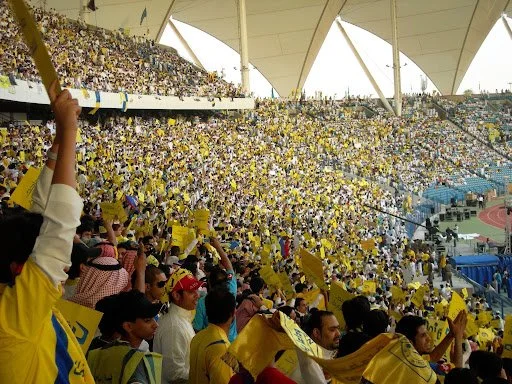
No country has changed the global sports landscape more rapidly in recent years than Saudi Arabia. Qatar and the UAE spent years building influence through focused assets, but the Saudi approach is distinguished by scale. Instead of relying primarily on one football club or one mega-event, the kingdom has assembled a portfolio that spans domestic football, European club ownership, golf, boxing, esports, tennis, motorsport, sponsorship, tourism, and the 2034 World Cup. That breadth reflects the central position of sport inside Vision 2030.
The Public Investment Fund sits at the center of the strategy. In 2021, a PIF-led investment group completed the acquisition of Newcastle United, with PIF taking the dominant stake and Governor Yasir Al-Rumayyan becoming non-executive chairman. The fund described the takeover as a long-term investment intended to position the club for future success. The acquisition gave Saudi capital a permanent presence in the Premier League, arguably the most globally visible domestic sports league in the world.
The strategic importance of Newcastle extends beyond match results. The club operates in a mature media market with a passionate local fan base and worldwide Premier League distribution. It therefore creates recurring exposure rather than the temporary visibility of a one-off event. Ownership also inserts Saudi decision-makers into the commercial ecosystem of English football, including relationships with sponsors, broadcasters, governing bodies, agents, and other club owners. Newcastle is simultaneously an asset, a communications platform, and an institutional bridge.
Saudi Arabia then turned inward. In 2023, PIF acquired 75 percent stakes in four major Saudi clubs (Al-Hilal, Al-Nassr, Al-Ittihad, and Al-Ahli) as part of a wider sports-club investment and privatization program. The Vision 2030 annual report presented the model explicitly: four clubs were converted into companies with 75 percent PIF ownership and 25 percent held by nonprofit organizations. The goal was not simply to subsidize teams but to professionalize the domestic sports sector, raise club values, improve governance, and build a league capable of becoming an international entertainment product.
The signing of Cristiano Ronaldo by Al-Nassr provided the breakthrough moment. Ronaldo’s global following gave the Saudi Pro League instant relevance, and the league followed by attracting a wave of high-profile players. The commercial effect was measurable in distribution. The Saudi Pro League later reported TV viewership exceeding 200 million, with three matches per week broadcast across an average of 160 countries. Even if the league remains far behind Europe’s largest competitions in revenue and cultural depth, the speed with which it entered global sports conversation is remarkable.
The domestic football project serves several objectives at once. It creates entertainment inside Saudi Arabia, encourages private-sector activity around sport, helps tourism authorities market the kingdom, and gives young Saudis local access to elite athletes. It also supports the state’s broader effort to make Saudi cities more attractive places to live and work. Vision 2030 is partly a competition for human capital: Riyadh wants multinational companies, entrepreneurs, and visitors to spend more time in the kingdom. A deeper entertainment economy helps support that ambition.
Tourism data show why sport has become strategically important. Saudi Arabia’s official national portal reported roughly 116 million domestic and inbound tourists in 2024, including around 30 million international visitors, with total tourism spending of approximately SAR 284 billion and inbound spending of SAR 168.5 billion. Not all of this growth is caused by sport—religious travel remains fundamental, and Saudi Arabia has invested across culture, leisure, and business tourism—but sport provides a high-visibility acquisition channel for visitors who might not previously have considered Saudi Arabia a leisure destination.
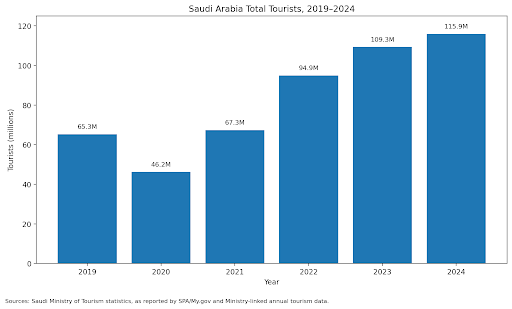
Figure 1. Saudi Arabia total tourists, 2019–2024. Source: Saudi Ministry of Tourism / Saudi National Portal.
The same strategy is visible in tennis. In 2024, the ATP and PIF announced a multi-year partnership that made PIF the official naming partner of the ATP Rankings and linked the fund to major tournaments worldwide. The WTA established a parallel partnership, and Riyadh became the host of the WTA Finals. The first Riyadh edition of the year-end championship drew a reported global audience of 78 million, according to the WTA, illustrating how hosting can connect the kingdom to viewers who may never travel there. In 2025, PIF’s Surj Sports Investment and the ATP went further, announcing that Saudi Arabia would become the host of a new ATP Masters 1000 event, expected to begin as early as 2028.
Sponsorship gives Saudi Arabia another route into global sport without requiring ownership or hosting. PIF signed a partnership with Concacaf covering men’s and women’s national-team and club competitions across North America, Central America, and the Caribbean. Such arrangements are strategically useful because they normalize the Saudi brand across multiple markets and age groups. They also create developmental and institutional relationships that can become more important as the kingdom seeks a larger voice in global football governance.
Combat sports have produced perhaps the most visible demonstration of Saudi Arabia’s willingness to reshape an existing industry. Riyadh Season has hosted heavyweight boxing bouts and major fight cards by offering purses and production budgets capable of bringing together athletes and promoters who had often struggled to agree on terms elsewhere. Turki Alalshikh, chairman of the General Entertainment Authority, became one of the most influential figures in boxing by using Riyadh Season as a platform to organize elite fights. The broader strategic effect has been to make Saudi Arabia a destination that boxing fans, broadcasters, promoters, and fighters now treat as part of the sport’s core geography rather than an occasional host.
Esports follows a similar logic but targets a younger demographic. Saudi Arabia has made gaming a national priority, backing the Esports World Cup and developing Qiddiya as a long-term entertainment hub. Saudi Arabia makes that involvement visible by hosting major competitions and investing in global gaming companies through PIF-owned Savvy Games Group. Qiddiya’s planned Gaming & Esports District is designed to host major events and attract gaming companies, while Savvy’s acquisitions extend Saudi-linked ownership into the global games industry. The attraction is partly demographic: gaming and esports connect directly with a young domestic population and with international audiences that may be less reachable through traditional diplomacy. Unlike stadium-based sports, esports can be global by default, making it particularly useful for a country trying to build a modern digital identity.
Golf was another major experiment. PIF’s financing of LIV Golf disrupted the professional game by using guaranteed contracts and large prize funds to recruit leading players, eventually forcing negotiations with the established PGA Tour. Yet the model also revealed the limits of state-backed sports disruption. In August 2026, Reuters reported that LIV Golf was laying off much of its staff after PIF funding ended, with the league seeking new investment for a future phase. The episode is strategically important because it demonstrates that even very large sovereign investors eventually confront questions of commercial sustainability. Buying market entry is easier than building a self-supporting sports product.
Saudi Arabia has also explored entirely new leagues. Reuters reported in 2025 that PIF was among strategic partners supporting plans for a $5 billion basketball league spanning Asia and Europe. Whether such projects ultimately succeed is less important than the pattern they reveal: Saudi capital is no longer only purchasing exposure within established sports structures; it is increasingly willing to finance alternative structures that could alter the competitive balance of global sport.
The 2034 FIFA World Cup is the culmination of this strategy. FIFA appointed Saudi Arabia as host in December 2024, making the kingdom the one of the first sole hosts of a 48-team men’s World Cup. The official Saudi bid proposes 15 stadiums in five cities, with a mixture of refurbishments, venues already under construction, and planned new builds. The scale of the program will create a fixed timeline for transportation, accommodation, public-space, stadium, and hospitality development through the next decade.
The World Cup also provides a platform for national storytelling. Saudi officials can present the tournament as evidence that the kingdom has moved from relative social closure to global openness within a generation. International visitors will encounter new entertainment districts, tourism destinations, and urban developments designed to support Vision 2030. The state will therefore use the tournament not only to host football but to demonstrate the broader transformation it wants investors, tourists, and citizens to believe in.
Domestic participation is central to the legitimacy of that story. Vision 2030 reporting indicates that regular adult physical activity has risen substantially, the number of organized clubs has expanded, and women’s national teams have multiplied. These changes matter because they distinguish the Saudi strategy from a model focused exclusively on elite spectacle. If sports investment creates durable participation, healthier lifestyles, women’s opportunities, and professional pathways, it generates benefits that cannot be dismissed as public relations alone.
At the same time, the human-rights risks around 2034 are substantial. Human Rights Watch has argued that Saudi bid documents failed to address forced labor, wage theft, heat exposure, and the kafala sponsorship system, warning that construction on the necessary scale could expose migrant workers to serious abuse. A coalition of rights groups said the World Cup award exposed weaknesses in FIFA’s human-rights commitments. These concerns will remain attached to the tournament regardless of the quality of the stadiums or the success of Saudi tourism.
The strategic test for Saudi Arabia is therefore not whether it can attract attention; it already has. The question is whether attention becomes durable economic value and political legitimacy. By 2034, the kingdom will need to show that the Saudi Pro League has a sustainable audience, that new venues are viable beyond major events, and that labor protections have improved enough to prevent the tournament from being defined by the same controversies that surrounded Qatar. Saudi Arabia has demonstrated an exceptional capacity to buy scale. Its next challenge is to turn scale into institutions.
Qatar: The First Mover in Gulf Sports Diplomacy
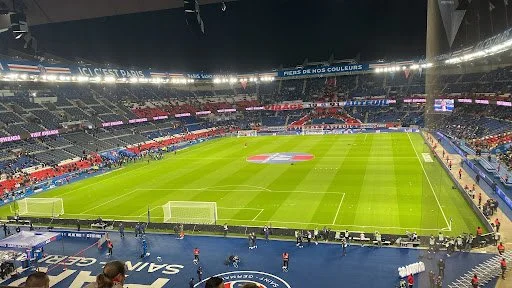
Qatar’s sports strategy was born from a different set of constraints. With a small citizen population, vast gas wealth, and a geographically vulnerable position between larger regional powers, Qatar has long treated international visibility as a form of security. Media, aviation, education, and sport all serve the same broad objective: making the country more connected, more recognizable, and more difficult for the international system to ignore.
Sport became especially useful because it allowed Qatar to build relationships across ideological and geographic boundaries. Before Saudi Arabia’s current expansion, Doha had already hosted Asian Games, tennis tournaments, motorsport, athletics championships, and football competitions. The 2022 World Cup did not emerge from nowhere; it was the culmination of a long strategy designed to turn Qatar into an international meeting point.
The acquisition of Paris Saint-Germain in 2011 through Qatar Sports Investments (QSI) was one of the most consequential steps. PSG gave Qatar a permanent presence in Paris, one of the world’s most visible cities, and an asset in the UEFA Champions League, one of the most watched annual sporting competitions. Over time, QSI transformed the club from a strong French institution into a global brand built around players such as Zlatan Ibrahimović, Neymar, Kylian Mbappé, and Lionel Messi.
The strategy initially attracted criticism for emphasizing celebrity and spending over institutional identity, but its commercial effect was undeniable. PSG moved into global fashion and lifestyle markets, formed partnerships with brands such as Jordan, expanded academies and stores, and accumulated an enormous digital following. The club now describes itself as a cultural and multi-sport institution with hundreds of millions of fans and social followers. In 2025, the football project achieved the goal that had remained elusive for more than a decade: PSG won its first Champions League. QSI’s own anniversary review noted that the club had won 37 trophies since the 2011 acquisition.
The title mattered politically as well as sportingly. For years, PSG’s failure to win the Champions League had been used as evidence that sovereign wealth could buy stars but not necessarily build a coherent football institution. The 2025 victory weakened that critique. It suggested that the Qatar-backed project had matured from celebrity acquisition toward organizational success. Reuters described PSG on the eve of the final as a more unified team operating under a collective approach, rather than the earlier star-centric model associated with the club’s first phase of Qatari ownership.
Qatar has also used PSG as a platform for wider sports investment. In 2025, NBA star Kevin Durant entered a strategic partnership with QSI and acquired a direct minority stake in PSG through his company Boardroom. QSI said the relationship would explore merchandise, media, community programs, and possible basketball and multi-sport expansion. This is an important evolution: Qatar’s sports strategy is no longer simply about owning a football club. PSG is becoming a platform through which QSI can connect to U.S. athletes and international consumer markets.
The 2022 World Cup magnified this model beyond anything PSG could achieve. FIFA reported that the tournament attracted more than 3.4 million stadium spectators and more than one million international visitors. The final at Lusail Stadium drew 88,966 spectators and reached close to 1.5 billion viewers worldwide. Qatar effectively turned itself into a global television set for one month, with aerial shots of Doha, the metro system, stadium architecture, cultural sites, and fan zones broadcast continuously across the world.
The compact geography of the tournament strengthened that effect. Unlike sprawling World Cups spread across large countries, Qatar concentrated the event in one metropolitan region, allowing visitors to attend multiple matches and keeping almost all global media activity centered on Doha. The city itself became part of the product. Infrastructure built in preparation for the event supported Qatar’s wider ambition to become a tourism and business destination.
The post-World Cup tourism numbers suggest that at least part of the visibility translated into sustained demand. Qatar Tourism reported 5,076,640 visitors in 2024, up 25 percent from just over 4 million in 2023, while the hospitality sector surpassed 10 million room nights. The country continued to use sport to sustain momentum, including the AFC Asian Cup and the Qatar Formula 1 Grand Prix. The strategic challenge after a mega-event is always the same: turning temporary attention into repeat tourism. Qatar’s early data indicate progress, even though tourism performance is also influenced by aviation connectivity and broader economic conditions.
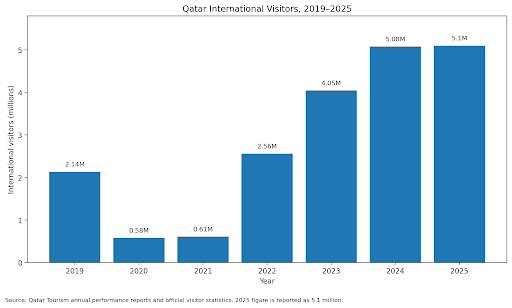
Figure 2. Qatar international visitors, 2019–2025. Source: Qatar Tourism
However, Qatar’s World Cup legacy is inseparable from labor controversy. Migrant workers built much of the infrastructure that made the event possible, and international organizations documented problems including recruitment fees, unsafe working conditions, and restrictions under the sponsorship system. Qatar introduced important reforms before the tournament, including a non-discriminatory minimum wage and changes to exit and job-transfer rules, but Amnesty International argued that implementation remained incomplete and that many workers never received adequate remedy. One year after the tournament, Amnesty continued to describe unresolved abuses.
This record complicates simple claims of either success or failure. The World Cup accelerated labor reform that might otherwise have taken longer, but pressure was uneven, and enforcement gaps remained. Qatar gained unprecedented visibility, but that visibility also exposed the country to unprecedented scrutiny. This is an important lesson for Saudi Arabia: hosting a mega-event does not only create positive association. It also invites journalists, NGOs, fans, and governments to focus on domestic issues that may previously have received limited attention.
From a soft-power perspective, Qatar’s experience nevertheless demonstrates the value of persistence. The country’s sports strategy was not a one-off campaign. It was built over decades through club ownership, broadcasting, sponsorship, repeated hosting, and infrastructure. The result is institutional familiarity. FIFA, global clubs, and media sponsors now treat Doha as an established node in the international sports system.
Qatar’s future strategy appears to be moving from proving it can host to extracting more value from the ecosystem it created. PSG’s Champions League victory strengthens the credibility of its club project. Tourism growth supports the World Cup legacy narrative. QSI’s partnerships point toward expansion into new sports and markets. The next phase is therefore less about a single defining spectacle and more about converting the assets of the 2010s and early 2020s into a durable global sports platform.
United Arab Emirates: The Networked Model
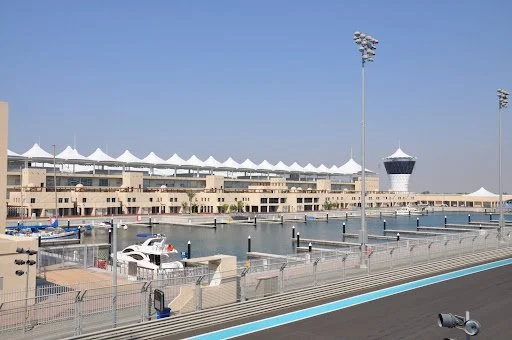
The UAE, and Abu Dhabi in particular, has pursued the most networked sports strategy in the Gulf. Qatar concentrated symbolic power in PSG and the World Cup; Saudi Arabia built an enormous multi-sport portfolio around Vision 2030. Abu Dhabi instead developed an ecosystem in which football ownership, motorsport, tourism, and global business reinforce one another.
The foundational moment came in 2008, when Sheikh Mansour bin Zayed Al Nahyan acquired Manchester City. The club’s own historical reporting described the acquisition as the beginning of a project intended to make City competitive in England and Europe. The investment worked on the field: Manchester City became one of the dominant clubs of the Premier League era and won the UEFA Champions League in 2023.
The more important strategic innovation came after the initial acquisition. City Football Group, established in 2013, turned the Manchester City model into a global network. CFG says it operates 12 clubs across five continents, with local presences in Europe, the Americas, Asia, and Australia. Its ownership structure remains majority controlled by Newton Investment and Development, which is fully owned by Sheikh Mansour, while U.S. technology investor Silver Lake holds a significant minority position. The model combines Abu Dhabi-linked capital with international private capital, reducing the sense that the project is simply a state-funded football venture.
The network creates several strategic advantages. It allows CFG to share scouting, analytics, coaching knowledge, commercial expertise, and talent pathways across clubs. It gives Abu Dhabi-linked ownership a presence in multiple national markets without requiring each club to become a global superpower. It also embeds the group in communities from Manchester and New York to Melbourne, Girona, Palermo, Bahia, and beyond.
CFG’s own commercial materials emphasize that its club network connects brands to a worldwide audience and supports more than 400 partner organizations. That is precisely why the model matters geopolitically. The influence generated by Manchester City does not end when a match finishes. It continues through sponsorship meetings, youth academies, community programs, digital platforms, tours, player transfers, and business relationships. Football becomes a network infrastructure for international engagement.
The UAE has paired this ownership strategy with event hosting. The Abu Dhabi Grand Prix, first held in 2009, anchors the emirate in the Formula 1 calendar and places Yas Island in front of a global audience every year. Formula 1 is particularly useful for Abu Dhabi because its audience overlaps with the emirate’s target markets: affluent travelers, multinational corporations, luxury brands, investors, and high-end hospitality. The race therefore functions as both a sporting event and an annual business summit wrapped in entertainment.
Yas Island illustrates the urban-development logic of sports strategy. The circuit sits within a larger leisure ecosystem that includes hotels, retail, and entertainment. A visitor attending the Grand Prix can be converted into a broader tourism consumer, while the global television images advertise the destination at the same time. Sport becomes a mechanism for place-making.
The UAE’s airline strategy reinforces the same effect. Emirates and Etihad have spent decades building global recognition through sports sponsorship, attaching Gulf aviation brands to football, tennis, Formula 1, and other competitions. This approach differs from sovereign ownership but serves a similar function. A passenger who repeatedly sees an airline associated with elite sport is more likely to recognize the brand when choosing a route through Dubai or Abu Dhabi.
The UAE’s wider economic model gives sport additional credibility. Unlike a strategy built around one emerging domestic sector, the UAE can place sport inside an already developed ecosystem of tourism and professional services. This helps explain why the country often performs strongly in international reputation measures. Brand Finance’s Global Soft Power Index 2026 ranked the UAE 10th globally, ahead of other Gulf states. Brand Finance separately noted that Saudi Arabia rose to 17th and Qatar to 20th in 2026, reflecting the broader regional investment in diplomacy, culture, tourism, and sport.
The Emirati model also demonstrates how soft power can become less visibly “national.” Fans may experience Manchester City primarily as a football institution, not as an Abu Dhabi communications campaign. Over time, this can make the influence more durable. The political association is present, but it is embedded in a club that has its own community. That is a subtler form of state-linked power than a tournament held under a national flag.
Critics argue that this subtlety is precisely why the model can be effective as sportswashing. Human-rights concerns in the UAE receive less attention during ordinary football coverage than the spectacular controversies surrounding a World Cup. The separation between private ownership structures and the state can also blur accountability, especially when leading political figures control investment entities. Academic research on Abu Dhabi’s use of City Football Group has therefore described the network as a form of sports diplomacy and soft power.
Yet the UAE’s strategy also contains a lesson in sustainability. Manchester City and CFG have developed substantial commercial value, global followings, private co-investment, and institutional capabilities. The assets are not dependent only on event subsidies. Formula 1 at Yas Marina has become an established annual fixture rather than a temporary spectacle. The network is therefore designed to endure even as individual political campaigns change.
This may be the most important distinction between the Emirati and Saudi models. Saudi Arabia is currently in a phase of rapid acquisition and construction. The UAE has spent nearly two decades institutionalizing its sports presence. By 2034, Saudi Arabia’s greatest success would be to reach a similar point: a stage where its sports assets no longer feel like new state initiatives but like permanent parts of the global sports landscape.
Club Ownership, Sponsorship, and the Architecture of Influence
European football clubs have become some of the most visible geopolitical assets owned by Gulf-linked investors. PSG, Manchester City, and Newcastle United are different in history, market, and ownership structure, yet together they demonstrate why clubs are so strategically valuable.
A club is not simply a company. It is a social institution with a local community, a global audience, a media presence, and an identity that can survive generations. Governments cannot easily manufacture that type of loyalty, but ownership gives them access to it. Every match produces media coverage. Every transfer generates headlines. Every trophy creates celebratory imagery. Every sponsor activation extends the network. The frequency of contact is what makes club ownership uniquely powerful.
The financial scale of elite football also matters. Premier League and Champions League clubs interact with major banks, private-equity firms, technology companies, and national federations. A Gulf investor entering this market gains relationships that can spill into other industries. This is one reason club ownership should be understood as geopolitical infrastructure rather than simply sports consumption.
Beyond their financial and institutional value, the clubs provide distinct branding advantages. PSG associates Qatar with Paris, fashion, celebrity, and European football culture. Manchester City connects Abu Dhabi-linked ownership to one of the most commercially successful clubs in England and to a multinational football network. Newcastle offers Saudi Arabia a club with deep local identity and long-standing fan loyalty, creating a different story: restoration rather than invention.
These relationships can also soften the distinction between “foreign investor” and “domestic stakeholder.” When a club renovates a neighborhood facility, supports a local charity, or wins a trophy, the owner can gain legitimacy through the club’s contribution to the community. Fans may oppose the politics of an ownership group while simultaneously appreciating investment in the team. That tension complicates attempts to regulate state-linked ownership on purely reputational grounds.
Sponsorship works in parallel but at even greater scale. PIF’s agreements with ATP, WTA, and Concacaf allow a Saudi institution to appear across competitions without taking responsibility for the underlying teams or leagues. Gulf airlines pioneered this model earlier, attaching their names to shirts, stadiums, tournaments, and broadcast inventory. Sponsorship is less politically exposed than ownership and can be diversified across dozens of markets.
The cumulative effect is a dense web of association. A fan might see a PIF-branded tennis ranking, watch a Saudi Pro League highlight, attend a Newcastle match, fly on a Gulf carrier, stream a Qatar-owned sports channel, follow PSG on social media, and watch the Abu Dhabi Grand Prix—all without consciously thinking about geopolitics. That is precisely how soft power works at its most effective: not through a direct political message but through repeated familiarity that can lead fans to associate Gulf states with the sports and teams they already care about.
The rise of Gulf sponsorship has also changed bargaining power within sport. Federations and tours seeking revenue increasingly view Gulf partners as essential sources of capital. The ATP said its sponsorship revenue rose sharply in 2024 amid new partnerships including PIF, and the commercial success of the arrangement reinforced the appeal of Gulf funding. Once governing bodies build budgets around such relationships, political calls for disengagement become more costly.
This creates a governance dilemma. Sports organizations often insist that they are apolitical, yet their financial choices inevitably affect international legitimacy. Accepting a state-linked sponsor can normalize that state’s presence. Awarding hosting rights can trigger infrastructure investment and diplomatic prestige. Selling a club to a sovereign-linked fund can create decades of association. The global sports system therefore participates in Gulf soft power even when individual organizations describe their choices as purely commercial.
At the same time, Western sports institutions are not passive victims of Gulf influence. They actively seek investment. Clubs need capital, federations want sponsorship, athletes want larger prize funds, and broadcasters want compelling events. Gulf states have succeeded partly because they identified unmet demand inside the sports economy. The relationship is transactional on both sides.
That mutual dependence is likely to deepen. As media fragmentation pressures traditional revenue models and sports organizations compete for global audiences, investors with patient capital become more valuable. The Gulf’s strategic advantage is not only money; it is the ability to coordinate money with hosting, tourism, infrastructure, and diplomacy. That combination makes the region difficult to replace with an ordinary commercial sponsor.
Conclusion
Sport has become one of the clearest instruments through which Gulf states are redefining their economic ambitions, international identities, and relationships with the wider world. Saudi Arabia, Qatar, and the United Arab Emirates have each pursued this strategy differently, but all three have recognized the same underlying opportunity: sport can generate attention, build commercial networks, support tourism, accelerate infrastructure, and create forms of influence that traditional diplomacy alone cannot easily reproduce.
Saudi Arabia has embraced the most expansive model. Through Vision 2030 and the Public Investment Fund, the kingdom has combined domestic league development, European club ownership, sponsorship, mega-events, and preparations for the 2034 FIFA World Cup into a broader national transformation project. Qatar took an earlier and more concentrated path, using Paris Saint-Germain, global sports media, and the 2022 World Cup to turn a small state into a permanent presence within international sport. The UAE, meanwhile, developed the most networked approach, embedding Abu Dhabi-linked investment in Manchester City, City Football Group, Formula 1, aviation, tourism, and global business.
Taken together, these models show that Gulf sports investment is about much more than acquiring prestigious assets. Clubs such as PSG, Manchester City, and Newcastle United provide continuous access to global audiences and institutions. Sponsorship agreements connect Gulf entities to federations, athletes, broadcasters, and commercial partners across multiple continents. Mega-events provide governments with fixed deadlines around which infrastructure, hospitality, transportation, and urban development can be coordinated. In each case, sport functions as an ecosystem rather than an isolated policy.
This also explains why the debate cannot be reduced simply to whether these investments constitute “sportswashing.” Reputation management is clearly part of the strategy, and concerns surrounding political freedoms, migrant labor, and the responsibilities of international sporting bodies remain central to any serious assessment. Yet the investments also produce tangible economic, institutional, and social outcomes. The more important analytical question is therefore not whether image-building exists, but how it interacts with diversification, infrastructure, tourism, commercial value, and long-term state strategy.
The central challenge will be sustainability. Gulf states have already demonstrated that sovereign wealth can purchase visibility and accelerate change. The harder task is turning that initial investment into institutions capable of lasting without constant subsidy or spectacle. Stadiums must remain useful after tournaments end, leagues must develop audiences beyond star signings, tourism must become repeatable, and club and sponsorship investments must continue generating value long after their political novelty fades.
What is already clear, however, is that the Gulf has moved from the margins of global sport to its strategic center. Through ownership, sponsorship, infrastructure, and mega-events, the region has built a durable presence across the institutions that shape how sport is financed, organized, and consumed. The next decade will determine whether that presence matures into a self-sustaining sports economy and a permanent source of international influence.


