

Beyond the Streets: Iran’s Youth and the Transformation of Protest
Written by Belsem Aljobory; Edited by Alex Tapia
March 10, 2026
Introduction
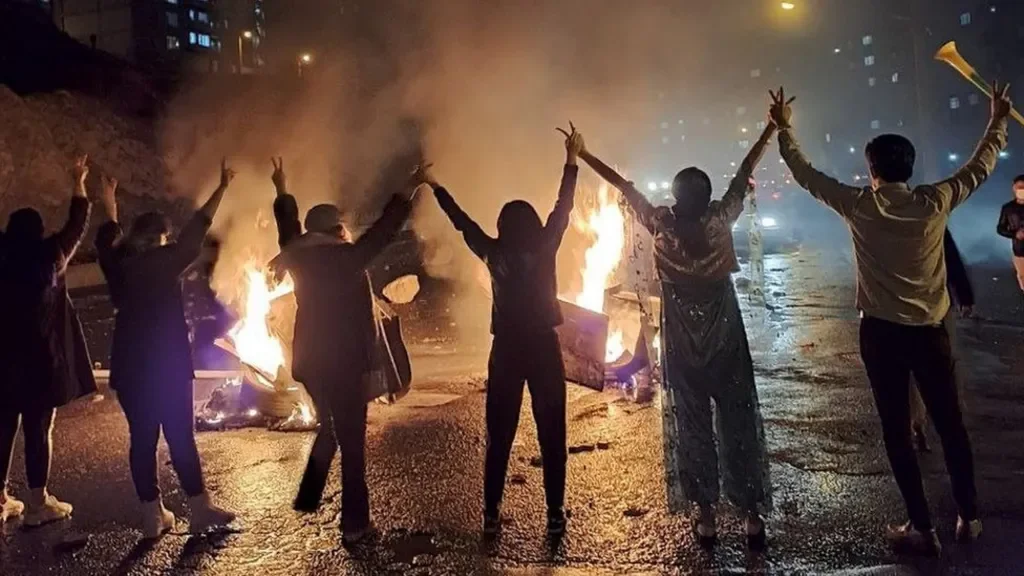
Protestors demonstrating after the death of Mahsa Amini. Source: BBC News
When crowds took to Iran’s streets to protest against the government in early 2026, the images seemed familiar. The demonstrators across cities, not just Tehran, chanted against political authority, and security forces responded with overwhelming force. But one of the most important stories of the current movement and politics of Iran is not whether the protests are visible. Rather, the more important story is how repeated cycles of protest and repression have transformed how young Iranians think about power, risk and the possibility of change.
Today, Iran’s youth are not retreating from politics but instead transforming the relationship between government and people. The legacy of the Woman, Life, Freedom movement, the protest movement sparked by the death of Mahsa Amini and driven by demands for women’s rights and political freedoms, has reshaped how young Iranians understand the power of government, people, risk and what it means to resist. Activism in Iran has moved from mass mobilization of citizens across generations and countries to something subtler: what’s described as “soft power,” where activism is quieter, less centralized, and potentially more enduring. Their power lies not only in taking to the streets with signs and chants, but is rooted through communities in universities, sustained through social media and recordings, despite consistent blackouts, and is carried forward by a generation that no longer expects reform from within the system.
The Current Crises
The most recent wave of unrest began in December 2025, triggered by a sharp economic collapse that rapidly eroded purchasing power and intensified the already severe cost-of-living crisis. What began as frustration over rising food and fuel prices, currency instability, and declining wages quickly spread nationwide and reached all 31 provinces within days.
Economic grievances evolved into political demands. Demonstrators increasingly called for structural change rather than quick policy adjustments, which showed a deeper dissatisfaction with the government in place and corruption. The state’s response was swift and severe. Security forces have used live ammunition and mass arrests, with allegations by civilians of the use of chemical weapons and executions of civilians amid curfews and deployment of armed patrols across major cities. By early January, internet access was cut nationwide, isolating citizens from each other and from the outside world.
Estimates of the death toll vary widely but all credible accounts suggest thousands were killed during the crackdown, making it one of the deadliest periods of repression in recent decades.
The Woman, Life, Freedom Generation
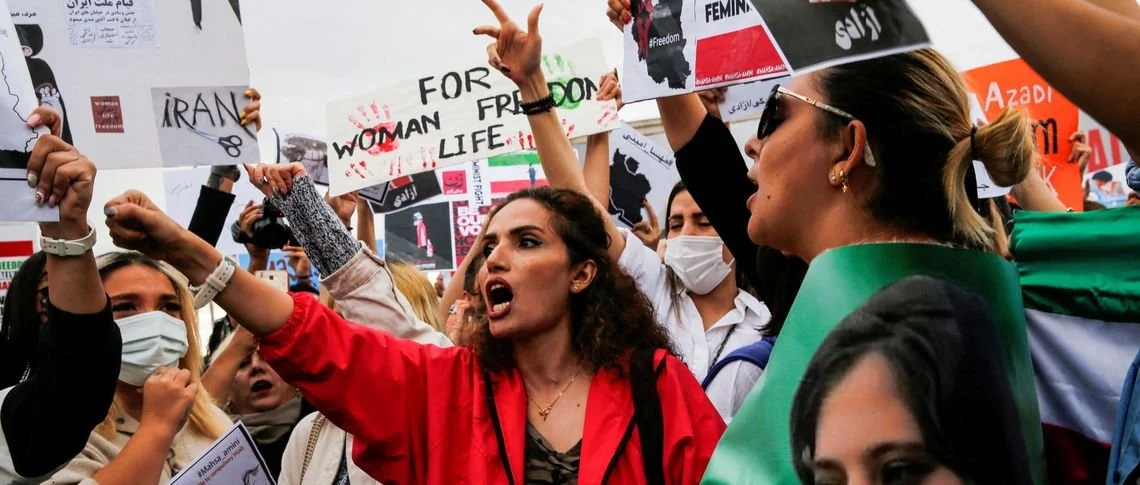
Demonstrators protesting for the Woman, Life, Freedom Movement after the death of Mahsa Amini that sparked outrage across the world.
Source: IPS Journal
For Iran’s youth, the significance of this movement cannot be measured by the number of people marching. The Woman, Life, Freedom movement, and the violence that followed, has produced something more profound: a generational shift in political expectations and demands.
Young Iranians have grown up through repeated cycles of protest and repression. Each cycle has narrowed the space for gradual reform. What distinguishes the current generation is not only their willingness to protest, but the growing belief that the political system itself lacks legitimacy.
Young women remain at the center of this transformation. Acts of cultural defiance, whether expressed through dress, public behavior, or online expression, have become everyday political statements. Resistance to the Iranian regime is no longer limited to organized protest events; it now takes place in daily life. This shift reflects a broader change in strategy. Rather than relying solely on moments of mass mobilization, youth activism is increasingly expressed through persistent forms of dissent that are harder for the government to control.
Universities as Hubs of Youth Activism
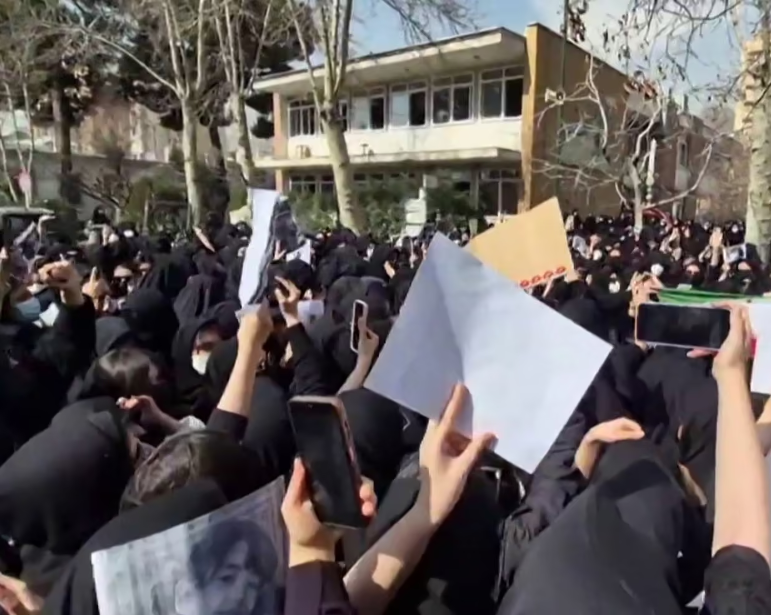
Students gathered at the AlZahra University in Tehran in mid February to demonstrate against the Iranian government. Source: The Guardian
Nowhere is this transformation more visible than in Iran’s universities. In February 2026, students staged the first large campus demonstrations since the January crackdown, with protests reported at multiple institutions, including Sharif University of Technology and other major campuses. Many students gathered to commemorate those killed in the previous month’s violence, while chanting explicitly anti-government slogans.
Universities have long been central to Iranian political movements, but their role today is evolving. Formal student organizations have been weakened by years of surveillance and arrests. In response, student activism has become more network-based and informal, where they are organized through interpersonal connections. This decentralized model makes student movements more difficult to dismantle.
Social Media under Government Blackouts
While universities provide the physical space for youth activism, digital platforms like social media provide the infrastructure. The government’s decision to impose a nationwide internet blackout in January underscored how central online communication has become to political organizations. Authorities cut connectivity precisely when protests reached their peak, where they would limit coordination among demonstrators, carry out larger scale crackdowns, and prevent media like images and videos from reaching international media, human rights organizations and Iranian diaspora networks. Yet even under severe restrictions, digital activism has not disappeared. Brief periods of restored connectivity would allow users to upload stored footage, share eyewitness accounts, and reconnect with Iranians abroad.
This means social media no longer functions as the primary tool for mobilizing large protests. Instead, it keeps political memory alive, where abuses are documented, names of victims are remembered, and maintains a unified front of resistance. The importance of social media is amplified by the Iranian diaspora.
Pressure on Iran Intensifies
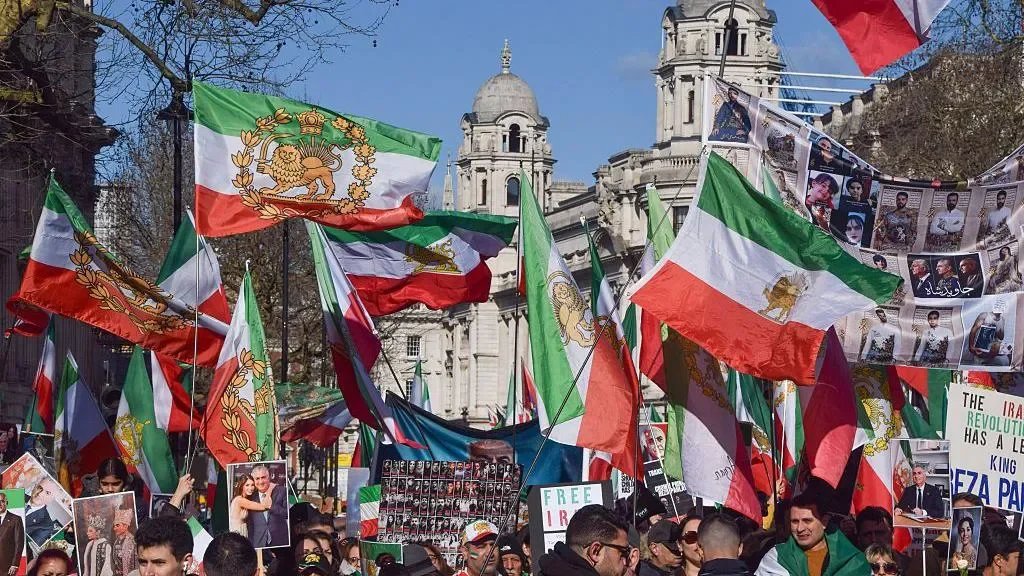
A large demonstration against the current Iranian government in London, England.
Source: BBC
As internal unrest continues, Iran is also facing growing external pressure. In recent weeks, the United States has significantly increased its military presence in the Middle East, where it deployed more than 120 aircraft, advanced fighter jets, surveillance systems, and two aircraft carrier strike groups within operational distance of Iran.
At the same time, the risk of escalation is rising. Iran has warned that any U.S. attack would be met with a decisive response and has conducted joint naval exercises with Russia while strengthening its defensive infrastructure. For Iran’s youth, this creates a difficult reality, where their struggle for political and social change is unfolding not only under domestic repression but also within an increasingly volatile international crisis.
Beyond domestic unrest, Iran is facing growing pressure from the international community and the Iranian diaspora. In February 2026, hundreds of thousands of people participated in demonstrations across the world, including in Munich, Toronto, Los Angeles, London and Sydney, as part of a broader protest against the Iranian regime. Organizers framed the protests as a message of solidarity to those inside the country, emphasizing “the world stands with you in this struggle.”
Conclusion
Though Iran’s youth has grown up in a political environment shaped by economic instability and repeated cycles of unrest, they continue to adapt the ways they resist. Ultimately, the future of political change in Iran may depend less on the size of any single protest and more on the long-term transformation of the generation leading them.
