

The Development of Islamist Terrorism in the Sahelian region of West Africa since 2010
Written by Zoé Leclézio; Edited by Alex Tapia
April 1, 2026
Introduction
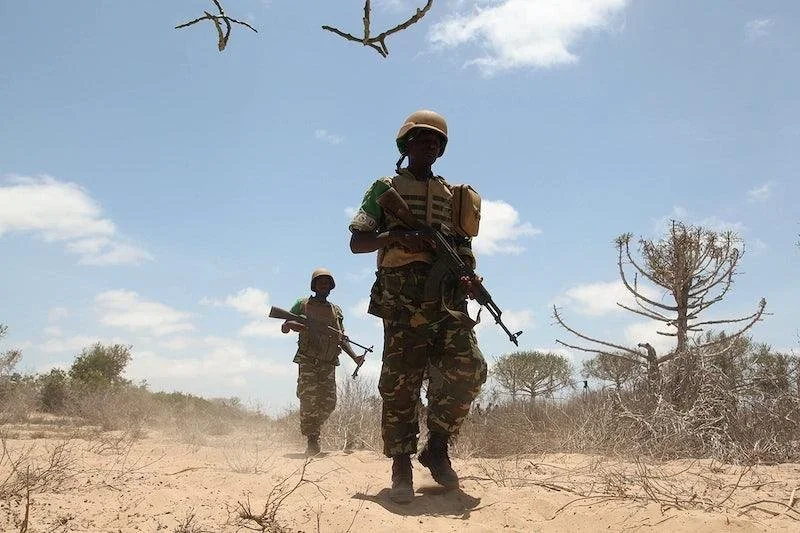
Malian Soldiers on patrol in the Malian countryside
Source: Ageniza Nova
Since 2010, the Sahel in West Africa has developed into one of the most violent exhibits of Islamist insurgency worldwide. The interconnected conflicts stretching across Mali, Niger, and Burkina Faso have created a complex web of violence anchored in governance failure, active socio-economic marginalisation, and transnational jihadist expansion. Although Mali initially was the epicentre of Sahelian jihadism, by the end of the 2010s, Burkina Faso, previously seen as a stable buffer, had become the most deeply ravaged state in the region. This essay outlines the development of Islamist terrorism in the Sahel since 2010, with a focus on the structural, political, and transnational factors that have enabled jihadist groups to thrive. It will use Mali, Niger, and especially Burkina Faso as case studies to illustrate how this phenomenon expanded from local vulnerabilities into global jihadist factions.
Islamist terrorism in the Sahel cannot be understood separately from its deep-seated state weakness, historic economic underdevelopment, and geographical challenges. The OECD’s Global Security Risks and West Africa report explains that weak borders, wavering governance, and socio-economic exclusion created the ideal conditions for non-state armed actors to thrive. Across the Sahel, many territories are still ungoverned or under-governed, especially in pastoral borderlands where the reach of the government is minimal. These zones have been exploited by smugglers and armed groups for a long time, becoming what Thomas Sanderson of the Center for Strategic and International Studies describes as an “arc of instability” stretching from Mauritania to Chad. Environmental pressures such as desertification and rapid population growth have intensified community conflict, especially between herders and sedentary farmers. Jihadist groups, such as al-Qaeda in the Islamic Maghreb (“AQIM”) and its affiliates, have exploited these grievances to embed themselves in land disputes, taxation, and justice. The Sahel’s fragility can therefore not be reduced to an ideology problem alone; rather, it reflects the long-term collapse of governance and legitimacy in peripheral zones of vulnerable nations.
Before diving into the emergence of contemporary jihadist movements in the Sahel, it is important to outline the ideological and organisational evolution of militant Islamism as it stems from Algeria in the 1990’s and early 2000’s. It starts with the Armed Islamic Group–known as GIA–created during the Algerian civil war embracing the radical Takfiri ideology which emphasised both violence and excommunication from the Algerian State and civilians. The conflict evolved and produced internal faction splits which led to the creation of the Salafist Group for Preaching and Combat (“GSPC”) in 1998 by Algerian militants seeking a more disciplined and globally connected jihadist community. The GSPC later then transformed into AQIM in 2007 which formalised the shift in harsher jihadi ideology embedding Algerian militancy within the broader al-Qaeda group. This led to an infusion of a greater transnational and doctrinally rigid orientation.
By the late 2000s, AQIM had established networks that bridged borders and rebranded itself to expand southward into Mali and Niger. Their southward movement was driven by both push and pull factors. Algeria striking counterterrorism deals, amnesties and exerting military pressure forced the AQIM hardliners to other borderlands. These efforts in the early 2000s pushed the surviving jihadi factions to seek operations beyond Algeria’s northern mountains where Mali offered fertile ground due to its vast ungoverned spaces, limited state presence, cross-border smuggling economies and community grievances which the insurgents could exploit. According to the Canadian Security Intelligence Services, AQIM “deliberately reoriented its strategy towards the Sahel, viewing northern Mali not merely as a sanctuary but as a region ripe for ideological outreach, recruitment, and shadow governance.”The embedding of Algerian jihadist ideology in Mali was gradual as cadres in Kidal, Timbuktu, and Gao made sure to cultivate social, commercial and political links with local elites, tribal networks and establishing trafficking structures which allowed them to integrate into the Malian sociopolitical networks. They marketed themselves not as foreign intrusion but as participants in longstanding Sahelian economies, leveraging marriages, business partnerships, and patronage as a way to gain acceptance.They engaged in kidnappings for ransom, smuggling, and propaganda aimed at local populations . These networks provided the paths through which militant ideologies could move freely across national boundaries to reach further people. The European Council on Foreign Relations’ mapping project similarly shows that Algerian commanders like Mokhtar Belmokhtar adopted hybrid identities that blended jihadist doctrine with local customs, facilitating both alliance formation and the diffusion of Salafi-jihadist narratives.
Ideologically, the transfer was not a simple one-way export but rather that Algerian jihadism was refracted through Malian realities. AQIM introduced Salafi-jihadist norms—such as strict monotheism, rejection of customary tribal law, and advocacy for global jihad—but adapted them to local grievances around corruption, marginalisation, and state neglect. While the core ideological base remained Algerian, the group’s discourse focus shifted toward local justice provision, anti-corruption rhetoric, and protection of vulnerable communities, helping legitimise the movement among some northern populations. This blending of global jihad with local discontent laid the foundation for the later proliferation of jihadist factions in Mali and, eventually, the regionalisation of violence across the Sahel.
The interaction between Tuareg—defined as the Amazigh or Berber speaking nomadic tribes of southern Sahara—political movements and jihadist organisations is central to understanding another factor contributing to the ideological and strategic transformation of northern Mali since 2010. Tuareg rebellions have recurred for decades, rooted in historical grievances over autonomy, state neglect, and perceived southern domination further exacerbated by previously mentioned Algerian militants. The Harvard International Review emphasises that longstanding patterns of mobility, political fragmentation, and shifting alliances among Tuareg confederations created openings for external actors—including jihadists—to insert themselves into local disputes. The 2011 collapse of Libya following NATO intervention led to unrest which travelled to the region of the Sahel. The disintegration of Libyan state structures and leadership unleashed a flood of weapons and highly trained fighters into the Sahel. Tuareg mercenaries who had served in Muammar Gaddafi’s army returned to Mali with arms, which reignited separatist ambitions, effectively fuelling an already burning fire. Mali, already struggling with corruption and uneven development, proved incapable of containing the fallout. As the Centre for Strategic and International Studies notes, the Libyan crisis “transformed a manageable insurgency into a transnational jihadist insurgency by 2012.”
Initially, jihadist groups and Tuareg nationalists converged around shared tactical goals. An open study by SAGE on the 2012 uprising demonstrates that groups like AQIM, Movement for Unity and Jihad in West Africa (“MUJAO”), and Ansar Dine leveraged Tuareg networks, kinship structures, and smuggling routes to expand influence, while Tuareg elites relied on jihadist firepower to confront the Malian state. Prominent figures such as Iyad ag Ghaly–once a Tuareg nationalist–shifted ideologically toward jihadism, reframing Tuareg grievances within a Salafi-jihadist worldview (the belief that violence is mandatory to the creation of an Islamic State) and built Ansar Dine as a hybrid movement appealing to both nationalist and religious sentiments. This ideological fluidity blurred distinctions between secular separatism and religious militancy.
Many Tuareg factions resisted jihadist encroachments, viewing them as threats to customary authority which made their relationship ambivalent. According to the Journal of Modern African Studies, jihadists exploited internal Tuareg rivalries to secure footholds in contested zones and reshape local power balances in their favour. The clans outlined in the Journal’s argument are the Ifoghas and Imghad amongst others.Jihadist groups offered dispute resolution, financial incentives, and protection, drawing in marginalised Tuareg youth while sidelining traditional elders. Recruitment patterns were not purely ideological, but material incentives, protection needs and survival strategies played a major role in helping identify potential people to join the ranks. For many Tuareg, aligning with jihadists was less of a commitment to global jihad and more of a pragmatic adaptation to shifting power dynamics. However, the cumulative effect was a deep transformation of northern Mali’s political landscape: Tuareg identity politics became interwoven with jihadist mobilisation, enabling the rise of other groups like Ansar Dine and ultimately contributing to the formation of Jama’at Nusrat al-Islam wal-Muslimin (“JNIM”).
Actors and Factions
The Sahelian conflict ecosystem is characterised by a dense web of alliances, rivalries, and pragmatic arrangements among jihadist factions, ethnic militias, state security forces, and foreign militaries. Understanding this landscape requires a multi-actor mapping approach such as the one offered by The Council on Foreign Relations. The Global Conflict Tracker identifies the major jihadist actors—AQIM, MUJAO, Ansar Dine, JNIM, and the Islamic State in the Greater Sahara (“ISGS”)—alongside their zones of influence and patterns of cooperation or competition. While JNIM consolidates al-Qaeda-aligned groups under a broad umbrella, ISGS pursues a more uncompromising territorial strategy, resulting in periodic clashes between the two.
Ethnic dynamics further complicate the picture. Fulani, Tuareg, and Arab groups are intertwined with both jihadist and anti-jihadist militias, often aligning with armed factions to protect local interests rather than out of ideological affinity. Fulani communities, in particular, have been caught between jihadist recruitment pressures and state-backed militias, leading to reprisals in cycles that jihadists often exploit. In central Mali and north Burkina Faso, JNIM’s Fulani-centred Macina Liberation Front has capitalised on grievances over land, cattle theft, and state abuses. The OECD’s regional security reports note that Sahelian governments have increasingly relied on community-based militias, such as the Imghad Tuareg Self-Defense Group in Mali and the Volunteers for the Defense of the Homeland (“VDP”) in Burkina Faso, to supplement overstretched armies. While these militias offer short-term advantages, they often inflame ethnic tensions and trigger retaliatory violence. The International Crisis Group also documents “non-aggression pacts” between JNIM and certain communities or militias, reflecting the opportunistic nature of armed relationships. Such arrangements allow jihadists freedom of movement while reducing immediate hostilities.
Across Burkina Faso, Niger, and Mali, alliances shift constantly. The European Council on Foreign Relations’ mapping project titled “Mapping Armed Groups in Mali and The Sahel” reveals how jihadist groups maintain overlapping spheres of influence that sometimes involve coordination, such as shared intelligence or deconfliction mechanisms between AQIM-aligned units and local armed groups. Meanwhile, ISGS operates in a more predatory manner, often clashing with JNIM and local militias while expanding into tri-border zones. State forces, battered by coups and resource constraints, frequently engage in transactional relationships with militias, further eroding state legitimacy.The resulting landscape is best understood as a fluid conflict marketplace, in which actors pursue protection, taxation rights, and territorial access through a mix of violence and negotiation. This complexity underscores why purely military responses have failed to dismantle jihadist networks: the insurgency is embedded in social, economic, and political structures that transcend rigid ideological lines.
The Malian Example
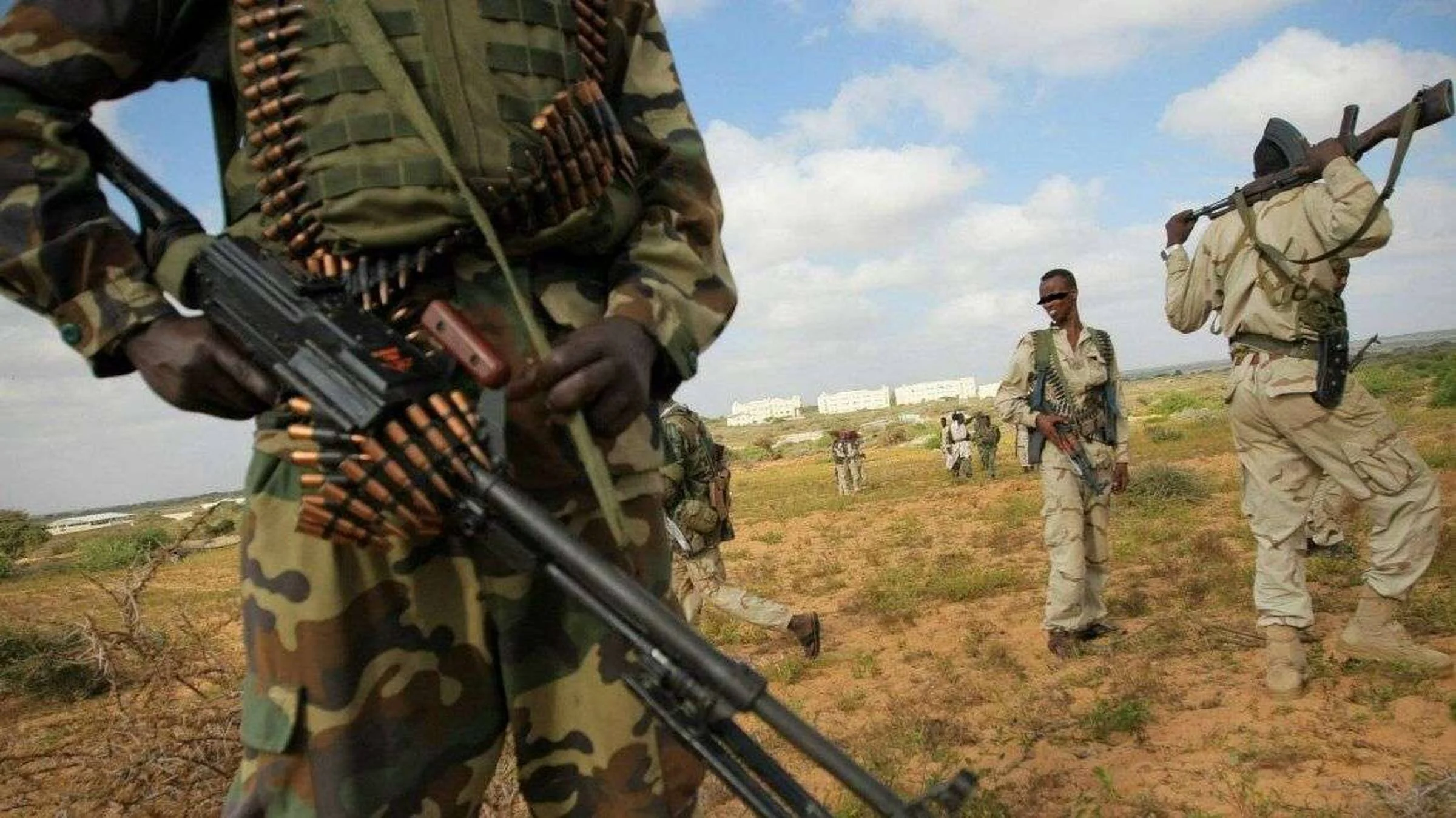
JNIM Members in Mali
Source: Agenzia Nova
The turning point for Islamist militancy in the Sahel came in 2012 when northern Mali descended into rebellion. The Tuareg movement, named the National Movement for the Liberation of Azawad (“MNLA”), launched a revolt seeking autonomy. Initially allied with Islamist factions such as Ansar Dine, AQIM, and the MUJAO, the coalition quickly fractured as jihadist groups asserted control over northern cities such as Timbuktu, Gao, and Kidal. The coup d’état in Bamako in March 2012 additionally weakened what little state authority remained.
In response, France launched Operation Serval in early 2013, which regained much of the territory but couldn’t dismantle jihadist infrastructure which was still intact. These groups reverted to guerrilla warfare and sought alliances with local communities. As the International Crisis Group observed, AQIM and its affiliates embedded themselves by providing a sense of “justice, security, and protection” in areas neglected by the government, which helped them gain popular support. The crisis in Mali became the starting point and incubator for the regionalisation of jihadist violence. Over time, the jihadist narrative of moral renewal and justice resonated with communities disillusioned by MNLA’s internal divisions and governance failures and by 2015, jihadists had adapted their strategy to form more cohesive entities and factions. In March 2017, several groups–Ansar Dine, al-Murabitun, the Macina Liberation Front, and a Sahara branch of AQIM–merged to form what is now known as JNIM, the biggest and most violent group in the region. Aligned with al-Qaeda, JNIM pursued a dual strategy aiming for insurgency and governance, offering resolution of disputes and limited services such as transportation, electricity or even internet to local populations that previously struggled with access to them. The organisation avoided large-scale Muslim casualties to differentiate itself from the Islamic State’s more widespread indiscriminate violence. Political instability continued to hinder and undermine Mali’s counterinsurgency capabilities. In August 2020, mutinous soldiers overthrew President Ibrahim Boubacar Keïta, citing “corruption and security failures” as their driving factors. Subsequent coups and the expulsion of international support forces deepened uncertainty, allowing militants to expand influence into central Mali and beyond. Human rights abuses by government forces, particularly against Fulani (Peuhl) civilians, further fuelled recruitment into jihadist ranks. Mali’s experience illustrates the never-ending cycle between state fragility and jihadist resilience.
The Nigerien Example
Niger’s exposure to Islamist violence is largely a function of geography. Because it shares long borders with Mali and Nigeria, it faces continuous threats from both JNIM and the ISGS, as well as from Boko Haram factions operating near Lake Chad. After 2015, attacks increased dramatically in the Tillabéry and Tahoua regions. ISGS targeted villages, local officials, and soldiers more than JNIM, using terror to extract resources and weaken government control. Massacres such as the March 2021 Darey-Daye killings demonstrated their capacity to inflict large-scale civilian harm with relative impunity. Despite international support, Niger still struggles with resources and local self-defence groups have sometimes worsened ethnic tensions by adding yet another unpredictable group to manage. The government’s limited presence in remote border areas allows jihadists to cement themselves through patronage and protection networks in those areas. While Niger has been more stable politically than its neighbours, its security responses are “increasingly heavily militarised and reactive,” reflecting broader regional weaknesses. By 2023, these militant groups operated freely across large areas of the western border zone, linking their operations with those in Mali and Burkina Faso.
The Burkinabé Example
Until the mid-2010s, Burkina Faso was often considered stable in a turbulent neighbourhood. Under President Blaise Compaoré (1987–2014), the country maintained somewhat pragmatic ties with various regional actors, allegedly acting as mediator between armed groups in Mali and elsewhere. This informal diplomacy had insulated Burkina Faso from the spillover of jihadist conflict so far. However, the 2014 popular uprising that ousted Compaoré actively disrupted these informal security arrangements. The subsequent transitional government lacked experience and networks to manage the country’s northern periphery and therefore lost that fragile insulation. The first major jihadist attacks occurred in 2015: a Romanian mine engineer was kidnapped near Tambao, followed by the assault on a gendarmerie post later that year.The collapse of Compaoré’s security apparatus coincided with the expansion of militant activity in neighbouring Mali, making Burkina Faso increasingly vulnerable.
The emergence of the locally rooted group Ansarul Islam in 2016 marked the domestication of jihadist insurgency in Burkina Faso. Founded by Ibrahim Malam Dicko, Ansarul Islam arose from social grievances among marginalised Fulani populations in the Sahel region. Ansarul Islam quickly aligned with JNIM, gaining access to their already established networks and resources. Attacks multiplied across the north and east, targeting both state representatives and civilians. Data reveals a dramatic escalation: Burkina Faso recorded the world’s largest year-on-year increase in terrorism fatalities in 2019, with a 590 percent rise. Schools closed, villages were abandoned, and the northern provinces became de facto ungoverned. The OECD observed that these groups expanded rapidly into the Centre-Nord and Est regions, blending intimidation tactics with local arbitration to gain legitimacy. French and Burkinabe forces launched joint operations such as Operation Bourgou IV in 2019, but these campaigns led to very limited long-term results. Between 2020 and 2022, Burkina Faso’s crisis reached unprecedented levels. Over 25,000 people were killed between 2018 and 2024, and nearly two million displaced internally and externally displaced. Public outrage over this insecurity led to the resignation of the prime minister in 2019 and eventually a military coup in January 2022. The new junta, led by Captain Ibrahim Traoré, promised to “restore security” as a transitional government but instead has seen further deterioration.
The regime’s principal countermeasure which was the creation of the VDP, has mobilised tens of thousands of civilians into paramilitary military roles which further fragments the Burkinabé security (U.S. Department of State, 2024). While the initiative greatly increased manpower, a lack of oversight led to rampant abuses, especially against Fulani communities accused of being jihadist sympathisers.Such practices often reproduce the factors that fuel insurgent recruitment.By 2025, jihadist groups controlled or influenced up to one-third (approx. 40%) of the country’s territory. JNIM consolidated their “governance” functions in rural areas, collecting taxes, settling disputes, and regulating commerce. The Norwegian Institute of International Affairs documents similar patterns of jihadist governance across the Sahel, noting that these groups increasingly act as replacement state actors in zones where government authority has been eroded. Burkina Faso therefore perfectly illustrates how fast paced government erosion can transform a security crisis into an existential one that helps Islamist terrorism develop in a region.
Observable Patterns in the Region
Across Mali, Niger, and Burkina Faso, Islamist militancy has spread through a gradual infiltration of the region rather than a one-time assault. The 2012 Malian crisis provided the template: militants exploit power vacuums, co-opt local disputes, and entrench themselves through hybrid governance merging violence and problem solving.As the OECD notes, jihadist networks in West Africa “combine ideological zeal with pragmatic adaptation” to local political economies ensnaring civilians in a false sense of security and justice. Effectively, Sahelian jihadists can be qualified as both insurgents and entrepreneurs, leveraging smuggling, taxation, and mediation to survive and expand their control. Unlike earlier waves of transnational terrorism, groups such as JNIM and ISGS have developed grassroots but effective governance systems. In Burkina Faso and Mali, they provide justice based on sharia norms, regulate markets, and impose moral codes. This dual role of coercion and governance blurs the line between rebellion and authority. Their legitimacy is heightened by state absence and by the predatory behaviour of security forces.
Government responses across the Sahel have been hindered by weak capacity, poor coordination, and excessive reliance on external military partners which increasingly led to notable resentment from Mali and Burkina Faso towards the French. France has played a crucial role in shaping the Sahel’s security landscape. Beginning with Operation Serval in 2013 and continuing with Operation Barkhane, France positioned itself as the region’s primary counterterrorism actor. Yet, over time, French involvement became increasingly controversial, tied to accusations of supporting corrupt elites, perpetuating neocolonial influence, and prioritising military solutions over governance reform. The OECD’s study on coups and jihadism argues that Sahelian states relied heavily on external military assistance while neglecting structural governance issues, producing brittle regimes that depended on French support for survival. This dynamic became politically toxic: as insecurity worsened despite a decade of French operations, public frustration turned against both domestic rulers and France. Alexander Thurston, Assistant Professor of Political Science at the University of Cincinnati, further explains that jihadism and coups have mutually reinforced one another as insurgent violence delegitimises governments, inviting military intervention, which then deepens governance crises and fuels more insurgency.Similarly, Al Jazeera’s Aina argues that French counterterrorism strategy—focused on kinetic operations and elite partnerships—helped entrench unaccountable governments, thereby worsening local grievances and indirectly facilitating jihadist expansion.French actions led to the broader legacy of Françafrique, characterised by resource extraction, political manipulation, and military patronage which also contributed to the anger and distrust of Sahelians. In this view, France’s military presence is seen as a continuation of colonial legacy rather than a neutral security partnership.
The French interventions (Serval, Barkhane) and multilateral frameworks such as the G5 Sahel Joint Force have achieved tactical successes but failed to address root causes such as population displeasure and the socioeconomic hardships pushing civilians toward paramilitary jihadist recruitment in the first place . Heavy-handed counterinsurgency operations and extrajudicial killings have alienated local populations, especially among the Fulani.Moreover, recurrent coups in Mali (2020, 2021), Burkina Faso (2022), and Niger (2023) have disrupted governance and undermined regional cooperation. Jihadism and coups reinforce each other: insurgencies erode public confidence, invite military takeovers, which in turn weakens legitimacy and fuels rebellion. In Burkina Faso, the junta’s prioritisation of coercion over governance has deepened societal fractures by instilling more fear than respect. The persistence of these dynamics suggests that military approaches alone cannot reverse insurgency.
Long-term stabilisation in the Sahel requires moving to rebuilding governance, justice, and inclusion. The OECD’s Military Coups, Jihadism and Insecurity in the Central Sahel report emphasises that effective counterterrorism “must integrate local reconciliation and equitable development.”As there are many groups within the Tuareg it is impossible to say with certainty whether their wishes are for development, full integration, or complete independence. Addressing ethnic polarisation, especially the stigmatisation of Fulani communities, is central to disrupting jihadist recruitment pipelines as it would curb the anger that fuels young recruits. At the regional level, strengthening institutions like the G5 Sahel Joint Force and enhancing cross-border intelligence cooperation are essential. International partners must commit to sustained, predictable support rather than episodic interventions, but after the dismantling of USAID there might be a delay in this implementation. Yet, as the Channel 4 News report titled “Why Western intervention is destined to fail in Mali” cautions, Western strategies often underestimate the political dimensions of Sahelian insurgencies, so they focus on military containment instead of state renewal. In Burkina Faso, restoring civilian governance and curbing human rights abuses are prerequisites for rebuilding legitimacy. Empowering local communities through participatory security arrangements, backed by oversight, could help mitigate alienation. Similarly, Niger’s relative resilience underscores the value of steady civilian control and international partnerships, though vigilance is required to prevent the contagion of instability.
Conclusion
To conclude, since 2010, Islamist terrorism in the Sahel has evolved from localised insurgencies into a regional system spanning Mali, Niger, and Burkina Faso. Its development reflects the convergence of long-standing governance failures, socio-economic marginalisation, and the southward diffusion of Algerian jihadist ideology through AQIM and its affiliates, which adapted global Salafi-jihadist narratives to local grievances. The movement’s durability comes less from ideological purity than from its capacity to exploit already in place structural weaknesses and political disorder. The 2012 Malian collapse marked the catalytic moment, enabling jihadist groups to merge with Tuareg rebellions, embed themselves in illicit economies, and establish hybrid governance systems that offered protection and justice where the state had withdrawn. As militant networks expanded across porous borders, Burkina Faso became the starkest example of state erosion transforming into an existential crisis, with the fall of Compaoré dismantling informal security arrangements and local movements like Ansarul Islam exploiting Fulani grievances to entrench jihadist authority. Burkina Faso’s dramatic descent—from stability to the epicentre of global terrorism—illustrates the convergence of fragility, insurgent adaptation, and state failure. The Sahel’s jihadist crisis is not just a security problem but a manifestation of governance collapse. The lessons are clear: merging security with justice, inclusion, and accountability is the only possible way to do effective counterterrorism. Without restoring legitimacy to the state and addressing the everyday grievances of marginalised communities, the Sahel’s jihadist insurgencies will continue to thrive no matter the military victories on the battlefield.
